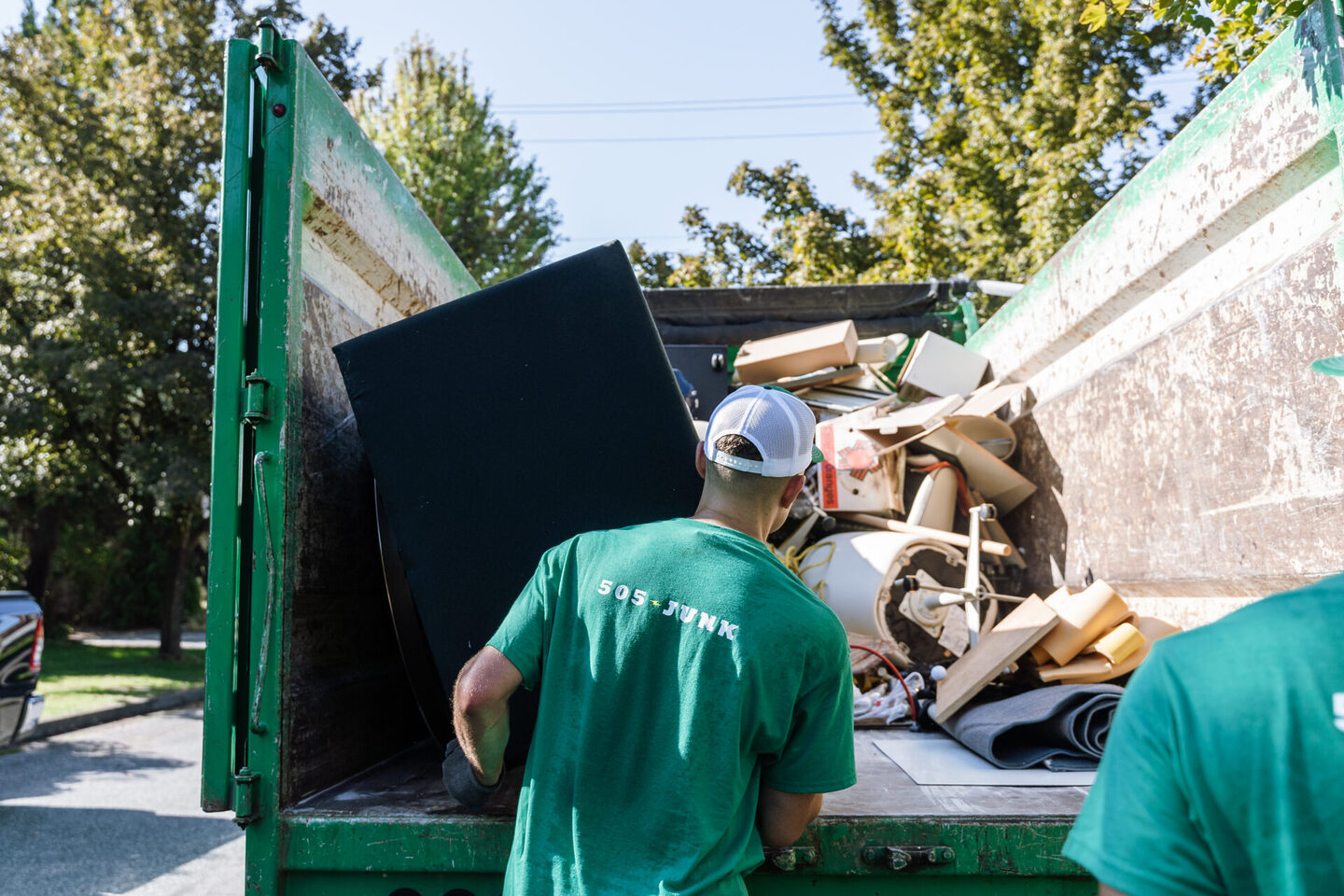
Carpet removal is a dusty, heavy job, and most homeowners put it off. It goes faster with a plan. Pull the carpet up, cut it into strips, and roll each one tight. Then book a pickup, and we will haul the lot away.
This guide walks you through the whole job. You will learn when carpet has run its course. You will also learn how to pull it up safely and where it can go. We also cover how to get it ready for a smooth pickup.
Signs It Is Time to Replace Your Carpet
Old carpet wears out in ways you can see and smell. Watch for these signs before you pick a new floor.
- Stubborn stains. Spills and pet marks come back after every deep clean.
- Musty smells. North Vancouver’s wet weather can leave damp odours in the pile and underlay.
- Flattened lanes. Hallways and stairs wear out first.
- Trapped dust. Worn fibres hold pet hair that a vacuum can’t reach.
- Ripples and loose seams. The carpet has stretched and no longer lies flat.
Plenty of people swap carpet for hardwood or vinyl plank during a renovation. Others just want a fresh start before they sell. Either way, the old carpet has to go first.
Should You Pull It Up Yourself or Hire Help?
Both routes work. The right pick depends on job size, your tools, and your time. Here is how to think it through.
When DIY Makes Sense
A single bedroom or a small office is a fair weekend project. You need a few basic tools and a free afternoon. The hard part is not the cutting. It is carrying the rolls out and getting rid of them.
Smaller jobs also suit people who already own a utility knife, pliers, and a pry bar. If you have a helper and a clear path to the door, you can finish quickly.
When to Call a Crew
Whole-house jobs are a different story. Stairs, long hallways, and several rooms add up fast. The rolls get heavy, and the dust gets thick.
A crew also helps if you have a bad back or no truck. It helps if you are racing a move-out date, too. You pull up the carpet, and we handle the lifting and the haul.
How to Pull Up Carpet Yourself
You can clear a bedroom in an afternoon with basic tools. A utility knife, pliers, a pry bar, and sturdy gloves cover most of it. Add a dust mask and knee pads, and the job gets much easier on your body.
Prep the Room
Move all the furniture out first. Take off the baseboards if you plan to reuse them. Wear a dust mask, because old carpet throws up fine dust when it lifts.
Open a window and keep pets and kids out of the room. Lay a drop cloth along your exit path to keep grit out of the house.
Pull and Roll
Strips are easier to carry than one big sheet. Work through the room in this order:
- Cut the carpet into strips about one metre wide.
- Pull each strip up from a corner.
- Roll each strip tightly and tape both ends.
- Cut the underlay into strips and roll it the same way.
- Pry up the tack strips and pull any staples left behind.
Go slowly with the tack strips. The nails are sharp, so keep your gloves on.
Tackle the Stairs
Stairs take more patience than flat floors. Start at the top and work down one step at a time. Cut the carpet at the back edge of each tread and pull it free.
Stair carpet is often stapled, not glued. A pair of pliers and a flat bar will get most of the staples out. Check every step for stray staples before anyone walks on it.
What to Do With Wet or Damaged Carpet
Not every job is a simple tear-out. Sometimes a leak, a flood, or a long damp spell has soaked the carpet. Wet carpet needs extra care.
- Move fast. Soaked carpet and underlay get heavier and harder to lift by the hour.
- Wear protection. Use gloves and a mask, especially if you see mould.
- Dry the floor. Let the subfloor dry fully before you lay anything new.
- Get advice on big areas. If the damage covers a large space, ask a flooring or restoration pro to check it.
Wet material is awkward to carry and messy in a vehicle. Bag it, roll it, and keep it off your good floors until pickup.
Where Old Carpet Goes in North Vancouver
Old carpet does not fit neatly into regular household waste. Read the City of North Vancouver’s garbage and recycling page before curbside drop-off.
Curbside Limits
Long rolls are awkward to fit in a household bin. A pile left outside also soaks up rain and gets much heavier. That makes it harder to lift later.
Disposal and Recycling Options
Renovation debris follows different rules than kitchen garbage. Metro Vancouver’s guidance explains how construction and demolition waste is handled in our region. The Recyclepedia tool from the Recycling Council of British Columbia lists where each material can go. Look up carpet and underlay there before you assume either one is recyclable.
505-Junk sorts every load by hand and sends what it can to reuse and recycling.
Why Pay-by-Weight Works for Old Carpet
A fair price for carpet removal should follow weight, not how big the pile looks. Our trucks carry Measurement Canada-certified scales. That gives you a real number instead of a guess. Here is what it means for your job:
- Certified scales. The scale on the truck sets the price.
- Pay for what you toss. A few rolls cost less than a whole room of carpet and underlay.
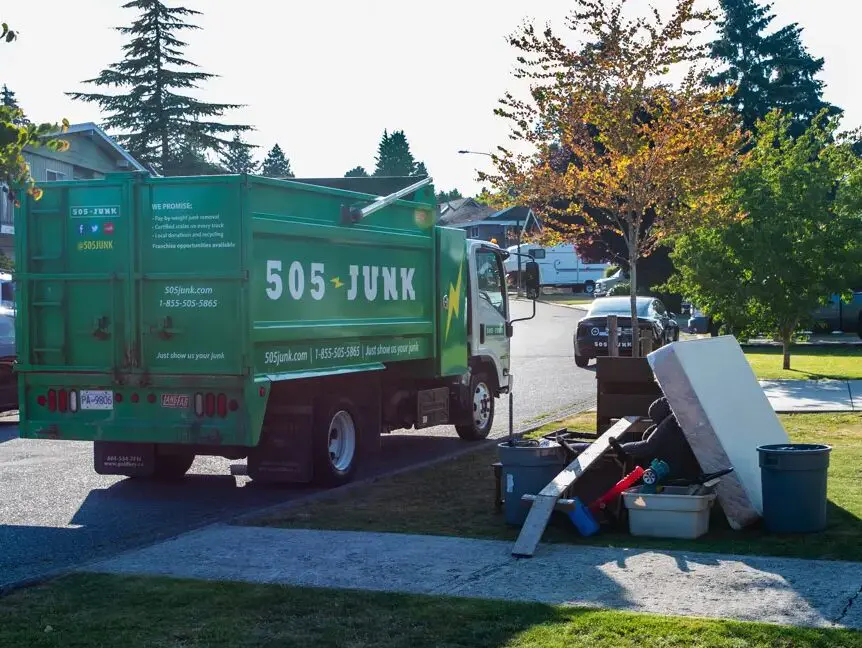
- Same-day service. Our North Vancouver crews can often reach you the day you call.
- No surprises. The weight, not a rough eyeball, drives the final price.
Weight pricing helps most when you mix materials. Carpet, underlay, and a few old boards all weigh different amounts. A scale sorts that out fairly, so you only pay for what leaves your home.
Tearing out more than flooring? We also handle construction waste removal for bigger renovation jobs.
Clear the Rest of the Room at the Same Time
Pulling up carpet often shows you everything else you want gone. The empty room makes clutter easy to spot. A single pickup can cover it all.
Think about these items while the floor is bare:
- Old baseboards and trim. Pry off any pieces you do not plan to reuse.
- Worn furniture. Chairs, shelves, and small tables that no longer fit the new look.
- Loose boards and offcuts. Leftover pieces from earlier projects.
- Stored boxes. Anything that has sat in the closet since the last move.
Bundling saves you a second trip and a second booking. It also gives you a clean, empty room to start from.
How to Prepare for Pickup Day
A little prep speeds up the whole visit. The crew spends less time hunting for items and more time loading. Use this short checklist:
- Stack the rolls in one spot near the door, garage, or driveway.
- Tape each roll so it does not unravel while it moves.
- Bundle the tack strips and wrap the ends.
- Keep the path clear of tools, boxes, and pets.
- Tell us about stairs, parking, or elevator access when you book.
Strata and apartment residents should also check their building rules. Many buildings ask you to book the elevator or loading area ahead of time. A quick call to your property manager avoids delays on the day.
Frequently Asked Questions
How much does old carpet weigh?
A full room of carpet and underlay adds up fast. Rain makes it heavier still, so we weigh every load on a certified scale.
Can I put old carpet in my garbage bin?
Long rolls rarely fit, and bulky items have their own rules. Check the City of North Vancouver’s guidance before you set anything out.
Do you take the underlay and tack strips?
Yes, we haul both. Tape the tack strips into a bundle so nobody gets cut.
Do you pick up from strata buildings?
Yes, we serve houses, townhomes, and strata buildings. Tell us about elevator or loading dock access when you book.
Do I need to cut the carpet into strips first?
Strips are easier to carry and load, so we suggest it. Bring the rolls to one spot, and we will take it from there.
Can you remove carpet from the whole house in one visit?
Large jobs are common, and same-day service is often possible. Tell us how many rooms you have when you book, so we can plan the load.
Ready to clear out your old flooring? Roll it up and book a pickup with 505-Junk. Just show us your junk, and we will handle the rest.