
Every move reveals how much stuff a home can hide. Drawers hold dead batteries. Closets hold clothes from three sizes ago. The garage holds boxes nobody remembers packing. Decluttering before a move is the fix. It means fewer boxes, a lighter truck, and a calmer first week in your new place.
This guide walks you through every room. You’ll also find a simple timeline and local disposal tips for Vancouver and nearby cities.
Why Is Decluttering Before a Move Worth the Effort?
Every item you keep has to be packed, lifted, carried, and unpacked. That’s four jobs for each thing. Skip a mug you never use, and you skip all four.
The payoff shows up fast:
- Fewer boxes. Less to wrap, tape, label, and stack.
- A lighter load. Movers and trucks have an easier day.
- A faster setup. You unpack only what you want.
- Less stress. A clear plan beats a last-night scramble.
Think of it as moving only the life you want to keep.
How Should You Sort Your Things?
Sorting is the hardest part, so keep the rules simple. Use four piles for every room:
- Keep. You use it, love it, or need it.
- Donate. It works fine, but you don’t want it.
- Recycle. It has a proper home outside the garbage.
- Toss. It’s broken, stained, or worn out.
Set a timer for each room. Make quick calls. Haven’t used it in a year? It probably doesn’t need a seat on the truck. Don’t open every box. Trust your gut and keep moving.
Where Should You Start in the Kitchen?
The kitchen is full of small items, so it takes the most time. Start with the pantry and fridge. Toss anything expired. Use up what you can before moving day.
Then move to the cupboards. Most kitchens hold duplicate pots, odd lids, and mugs nobody loves. Keep your favourites and donate the rest. Check the junk drawer last. Most of it can go.
Leave the everyday dishes until the final week. You still need them to eat. Pack a small kit of plates, cups, and one pot for the last few days. Label that box so it opens first in the new kitchen.
What Should Go From the Living and Dining Rooms?
Big furniture is the heaviest decision in any move. Ask a plain question. Will this piece fit the new space, and do you still like it? If the answer is no, let it go now.
Check the shelves next. Old DVDs, dusty decor, and stacks of magazines add weight fast. Keep what you display with pride. Donate or recycle the rest.
Bulky items like old couches, worn chairs, and broken tables need a plan early. Our furniture removal service takes them off your hands. We haul them out the same day when the schedule allows.
How Do You Declutter Bedrooms and Closets?
Closets hide the most clutter in any home. Pull everything out and sort it on the bed. Try the one-year rule. If you haven’t worn it in a year, say goodbye.
Look for these quick wins:
- Clothes that no longer fit
- Single socks and worn-out shoes
- Extra bedding and old pillows
- Boxes of keepsakes you never open
- Mattresses past their best
Donate clothing that’s still in good shape. Retire anything stained or torn. Old mattresses and bed frames are awkward to move, so book their pickup in advance.
What About Bathrooms and the Linen Closet?
Bathrooms are small, but they fill up with half-used products. Toss expired medicines, old makeup, and dried-out bottles. Never pour chemicals down the drain.
Keep towels you love and donate the extras. Linen closets often hold a surprising pile of old sheets. Pick your best sets and let the rest go. Old towels and blankets can go to animal shelters. Call ahead and ask what they need.
What Should You Clear From the Basement, Garage, and Storage Locker?
These spaces hold the heaviest items. They also hold the most forgotten ones. Old paint cans, broken tools, spare tires, and exercise gear all pile up here.
Take it in stages. Sort by type, not by shelf. Group the paint, the tools, and the sports gear. Then decide what earns a place in the new home.
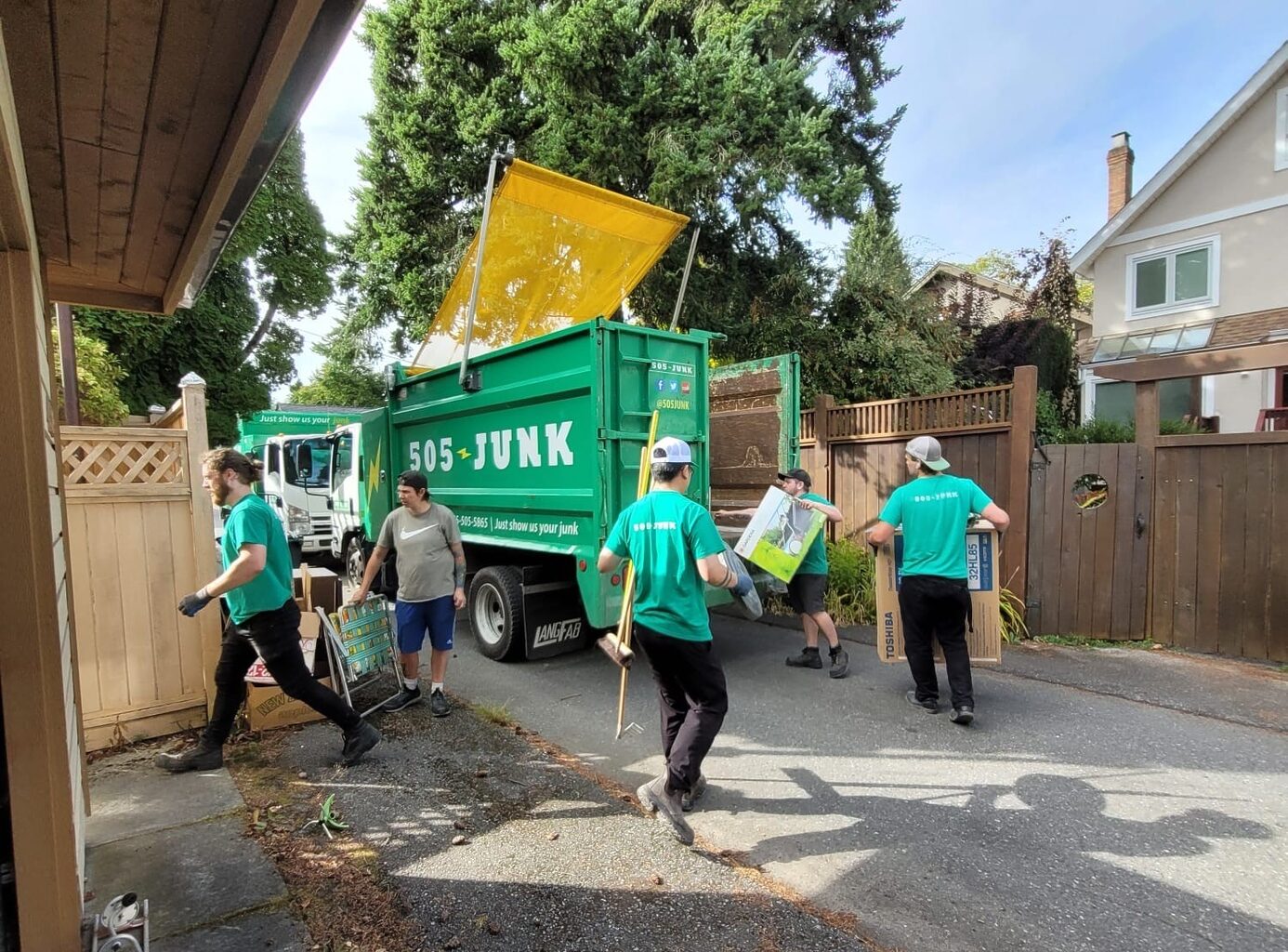
Heavy loads are where a crew helps most. Our team carries items up the stairs and out the door, so your back stays safe.
How Do You Handle the Home Office and Paper?
Paper builds up quietly. Sort old files into keep, shred, and recycle. Scan documents you want to save. Keep tax records and important papers in one labelled folder that travels with you.
Then check the cables. Most homes have a tangle of old chargers and dead gadgets. Test them. Recycle what no longer works.
How Do You Deal With Sentimental Items?
Keepsakes slow everyone down. Photos, kids’ drawings, and old gifts all tug at you. Give yourself a limit before you start.
Pick one box per person and fill it with the best pieces. Take a photo of anything that can’t make the cut. A picture holds the memory without the weight. If a relative might want an item, ask them now, not after moving day.
Set a firm stop time for this kind of sorting. An hour is plenty. Otherwise a single shoebox of letters can swallow your whole afternoon.
What Do Local Disposal Rules Say?
Some items can’t go in the garbage. Metro Vancouver runs a disposal ban program. It keeps certain recyclable and hazardous materials out of the trash. Read it before you load a bin.
Take a few minutes to check the odd items. Paint, batteries, and electronics are the usual surprises. Our crew handles the sorting once the load is on the truck.
When Should You Call a Junk Removal Crew?
Some piles are too big or too heavy to handle alone. Call a crew when you see these signs:
- Large furniture you can’t lift
- A full basement or garage
- Piles that block your packing space
- A tight moving deadline
- Items that need a truck
Our residential junk removal service covers homes of every size. You point at what goes, and we do the lifting. We weigh the load on Measurement Canada-certified scales. You pay only for what leaves your home. Usable items can go to donation through our Habitat for Humanity partnership.
Book the pickup a day or two before the movers arrive. That gives your home time to clear out. It also leaves you a calm, clean walkthrough. If your moving date shifts, tell us early so we can adjust.
What Does a Simple Timeline Look Like?
A plan keeps the work calm. Here’s an easy schedule:
- Six weeks out. Start with storage areas, the basement, and the garage.
- Four weeks out. Sort closets, shelves, and extra furniture.
- Two weeks out. Tackle the kitchen, bathrooms, and paper.
- One week out. Book your junk pickup and pack the rest.
- Moving day. Leave only what is going to the new home.
Even a shorter timeline works. Just start with the heaviest areas first.
Frequently Asked Questions
How early should you start decluttering?
Aim for four to six weeks. Larger homes may need more time. Start with the rooms you use least.
What should you get rid of before moving?
Let go of anything broken, expired, or unused for a year. Add furniture that won’t fit the new space.
Can you donate items before a move?
Yes, if they’re clean and in working order. Our Habitat for Humanity partnership gives usable items a second home.
Do you offer same-day pickup?
We offer same-day service across Greater Vancouver. Availability depends on the schedule that day.
How does pay-by-weight pricing work?
We weigh the load on the truck’s scale. You see the number and pay only for the weight we haul away.
What if I only have a few large items?
That works too. Tell us what you have when you book, and we’ll plan the visit.
Ready to Lighten the Load?
A smaller move is a smoother move. Start decluttering before a move today, and let 505-Junk handle the heavy parts. Request junk removal online, and we’ll take it from there. Just show us your junk.