
Not all junk removal companies work the same way. Some price by volume. Some price by weight. Some show up the same day, others book you a week out. Some sort every load before it leaves your property. Others just haul everything straight to the dump. Here’s what separates one provider from the next, and what to check before you book.
Pricing Models Are the Biggest Difference
Most companies quote by truck space. A crew looks at your pile and guesses how much of the truck it fills. Then they price from there. That guess can shift once the truck is loaded, and your bill can shift with it. If your pile turns out bigger than expected, the number you agreed to can climb fast.
A smaller number of companies price by weight instead. The truck rolls onto a certified scale before and after your load goes in. You pay for exactly what came off your property. There’s no eyeballing and no renegotiating once the crew starts working. This model rewards a lighter load, too. A truck full of cardboard weighs far less than one full of concrete or soil. The price reflects that difference honestly.
Our own trucks run on Measurement Canada-certified onboard scales. You can see how pricing works before the job starts. You see the number. You know what you’re paying for before the truck pulls away. That kind of proof counts once a job runs bigger than a single room. It gives you something concrete to compare against another quote.
What “Service” Really Means
Two companies can offer the same rough price and still deliver a completely different experience. The details make the real difference, not just the quote.
Labour and Loading
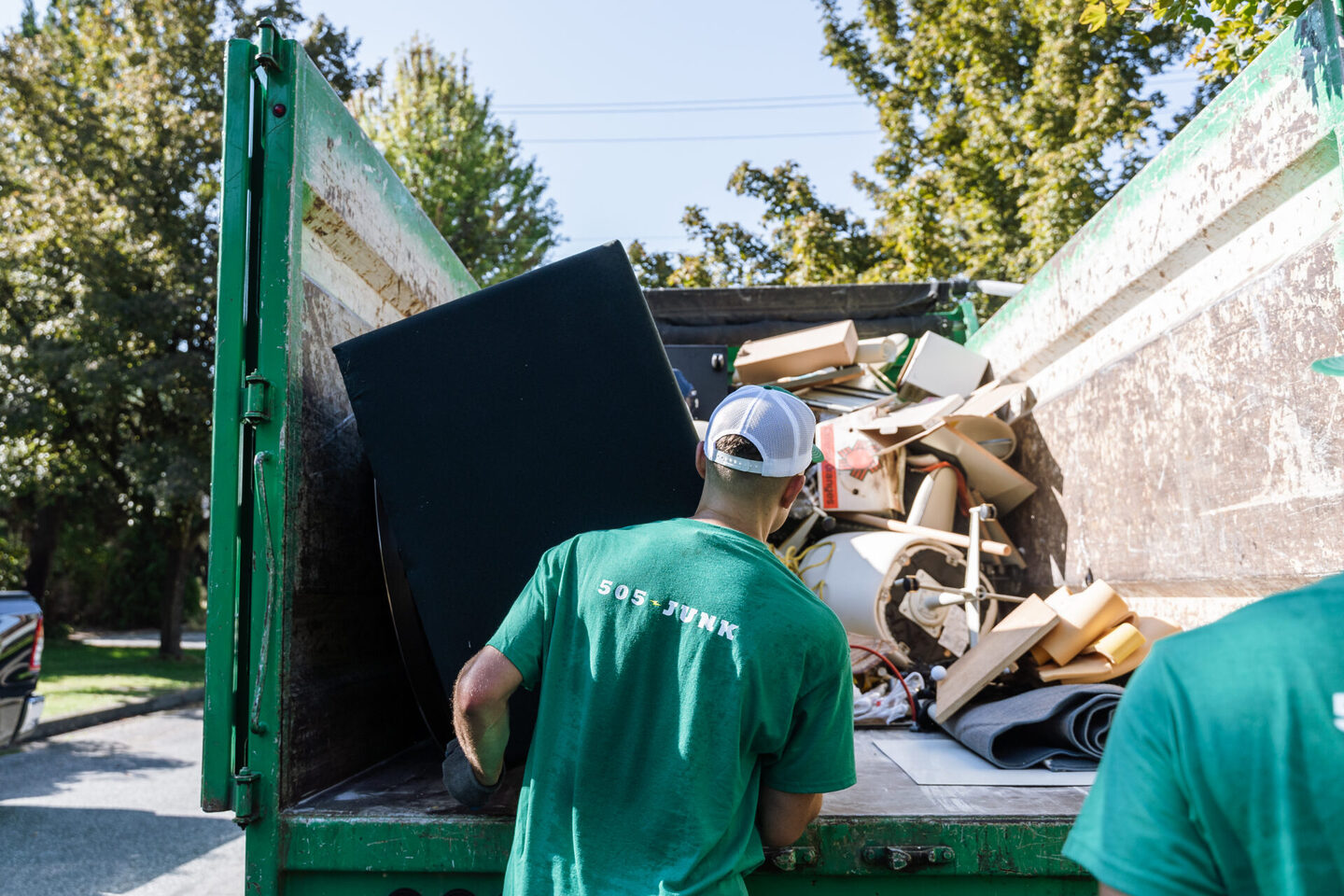
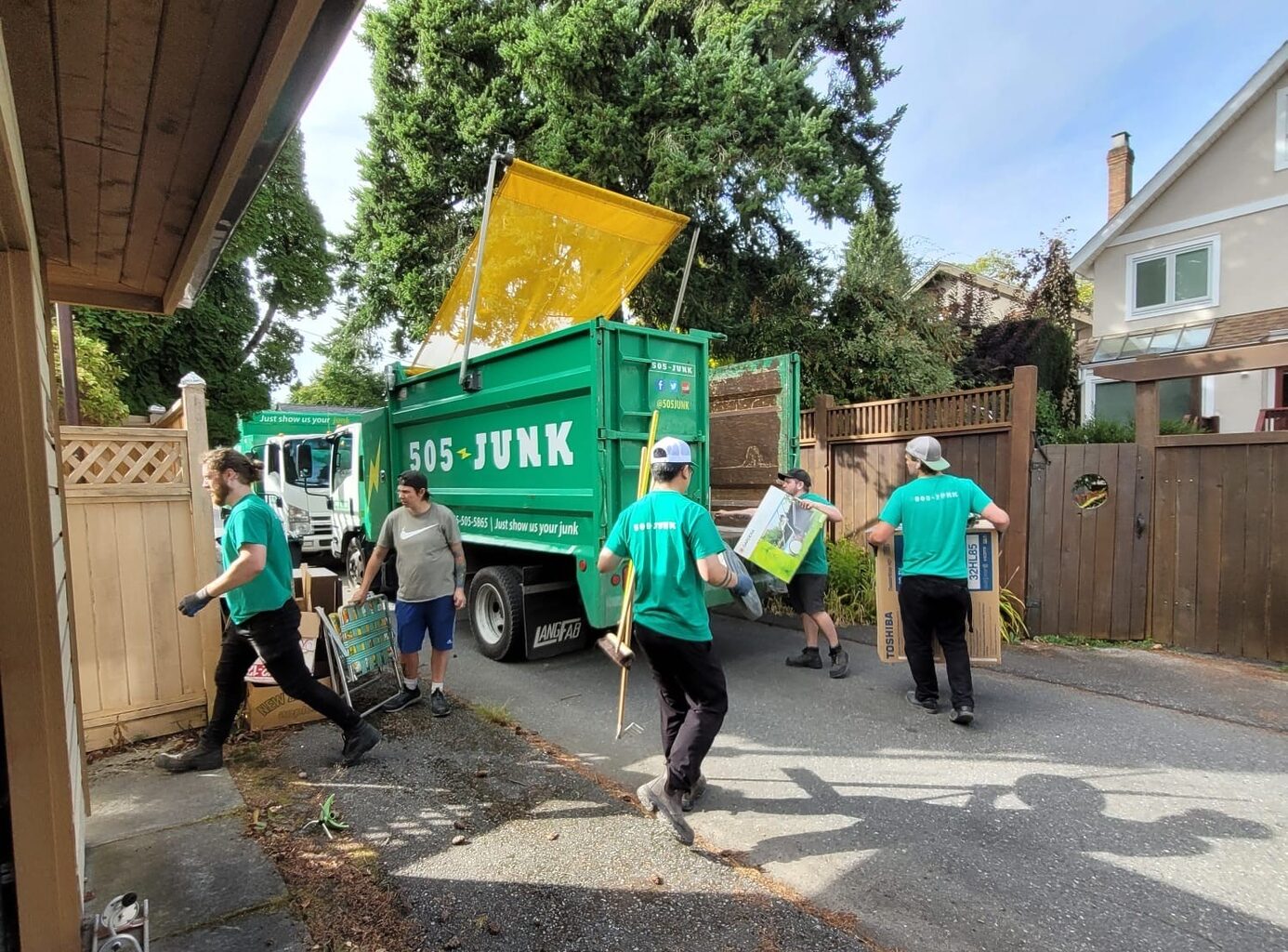
Full-service junk removal means the crew does the heavy lifting. They walk through your home or job site, point out what goes, and load it themselves. Some lower-cost options only offer curbside pickup. That means you still have to drag everything out yourself. For a garage cleanout or an estate job, that difference counts. It can decide whether you hire help at all. Or you could end up spending your whole weekend hauling boxes to the curb.
Sorting and Disposal
A good crew sorts your load before it ever reaches a landfill. Metal gets recycled. Usable furniture and appliances go to donation partners. Only the true waste gets hauled away. Ask any company how they handle sorting before you book them. A company that cannot explain where your items end up probably isn’t sorting much at all. That gap is worth asking about directly, rather than assuming the best.
Insurance and Accountability
Ask whether the crew carries liability coverage before anyone sets foot in your home. Furniture gets dragged past walls and down stairs, and accidents happen even with careful movers. A company that hesitates to answer this question is worth a second look. The same goes for background-checked staff. Strangers will be walking through your space, near your belongings. It pays to know exactly who is on the crew.
Same-Day Availability vs Scheduled Windows
Timing is where companies split fastest. Some run tight routes and can only fit you in days out. Others build slack into the schedule specifically to handle last-minute calls.
Same-day service counts most for residential cleanouts on a deadline. Think a move-out or a last-minute open house. It counts just as much for commercial clients clearing a unit before new tenants move in. Property managers in particular need a provider who can turn a unit around fast between tenants. A vacant unit sitting full of junk costs them time and rent.
How You Know What You’re Paying For
Transparency is easy to promise and hard to prove. A company that estimates by eye is making an educated guess. That guess can grow once the truck is on site.
Certified scales remove the guesswork completely. The weight reading is the same number a regulator would check. It isn’t a figure the crew picked. That’s the difference between a quote and a fact. Ask to see the reading yourself if a company offers weight-based pricing. A provider confident in its process will show you the number without hesitation. That small moment tells you a lot about how the rest of the job will go.
How Location and Service Area Shape Your Options
Some junk removal providers operate across the entire country. Others focus on a single region. National operators often run larger fleets and wider marketing reach. That scale doesn’t always translate into a faster local response, though. A company built specifically around Greater Vancouver tends to know the local transfer stations well. It usually knows the recycling depots and donation partners too. That local knowledge often beats a provider managing dozens of cities at once.
Local focus also affects how fast a truck can reach you. A company running routes across our service area every day can slot in a same-day pickup. A wider national operation may not match that on short notice. Ask any provider how many trucks run in your neighbourhood on a given day. That number tells you more than how many cities they list on their website.
Customer Segments: Residential, Commercial, and Construction
Not every customer needs the same thing from a junk removal provider. The best companies price and staff their crews accordingly. A homeowner clearing out a garage wants trust and a fair number. They also want confirmation that their old furniture isn’t headed straight to a landfill. That customer cares about the story behind the pickup nearly as much as the price itself.
Building managers and strata councils need something different. They want a provider who can invoice properly and show up on a set schedule. Handling repeat work without constant follow-up calls counts for a lot here. Staying consistent across many units beats winning any single job.
Contractors and renovators bring a third set of needs entirely. They want same-day availability and weight-based pricing that reflects heavy debris fairly. They also want a crew that understands demolition cleanup, not just household junk. A company that treats every group the same way runs into trouble. It usually ends up serving none of them well.
Construction and Commercial Junk Removal Comparisons
Construction and demolition debris behaves differently than household junk. That changes how companies price and sort a job. Metro Vancouver’s own waste composition study shows how much of this material can be recycled. Very little of it truly needs to end up in a landfill.
Regional guidance on demolition waste points contractors toward sorting wood, drywall, and concrete separately. That keeps more material out of the landfill. The City of Vancouver’s own program for reducing construction waste backs the same approach. It’s a useful read for any contractor planning a renovation.
A junk removal company built for contractors should already sort this way. Weight-based pricing works well here. Renovation debris varies a lot in density from one job to the next. A volume-based estimate can miss the mark badly on a heavy demolition load. A small pile of concrete can weigh more than a truck full of drywall scraps. Our construction waste removal service runs on the same certified scales as our residential jobs. Pricing stays consistent across both, from a bathroom renovation to a full basement gut.
Questions to Ask Before You Book
A quick set of questions can tell you more about a provider than any website will. Ask how they calculate the price. Get specific about whether it is based on weight, volume, or a flat estimate. Ask what happens to items once they leave your property. Listen for a real answer rather than a vague mention of recycling.
Ask how fast they can realistically get to you, not just what their website advertises. Ask whether the crew carries insurance, and whether pricing can change once the truck arrives. A provider willing to answer all of these clearly, without hedging, is usually the safer choice. If a company dodges one of these questions, treat that as useful information on its own.
Signs a Quote Might Not Hold Up
A few warning signs tend to show up before a job goes sideways. Watch for quotes that seem unusually low compared to every other provider you called. A number that low grows once the truck is loaded and the crew reassesses the pile.
Watch for vague answers about where your items go after pickup. A company that cannot describe its sorting process in clear terms may not have one. Watch for pressure to book immediately without time to compare options. A provider confident in its pricing and process rarely needs to rush you into a decision. A solid quote holds up whether you book today or next week.
The Bottom Line
Price is only part of the story. The way a provider weighs your load and sorts your items tells you plenty. So does whether they show up on time. Ask direct questions and compare a few quotes side by side. Choose the company whose answers hold up under a second look. Write down what each provider tells you if you’re comparing more than one. The details tend to blur together fast once you’ve made several calls.
Frequently Asked Questions
How much does junk removal cost?
It depends entirely on the pricing model. Weight-based providers charge for exactly what leaves your property, while volume-based providers estimate by truck space.
Do junk removal companies recycle or donate items?
Most reputable companies sort loads before disposal. Usable items go to donation partners, and recyclable materials go to the right facility. Ask a company directly about their sorting process before booking.
Can a junk removal company handle construction waste?
Companies that serve contractors regularly should already sort debris like wood, drywall, and concrete separately. Weight-based pricing tends to suit construction jobs better than flat volume estimates.
How fast can a junk removal company come?
This varies by provider and by route capacity that day. Companies that build flexibility into their schedule can often turn around a same-day pickup.
Do I need to be home for the pickup?
Most providers ask you to walk through the space first so the crew knows what goes. Some allow you to point everything out and step away while the crew works.
What items can’t a junk removal company take?
Rules vary by provider and by region. It’s worth asking directly about hazardous materials, certain electronics, and anything requiring special disposal. A transparent company tells you this upfront rather than surprising you on pickup day.
Ready to see the difference a certified scale makes? Request a pickup and find out exactly what your load weighs.