
An old couch, a broken dresser, or a full bedroom set is tough to move alone. Once you start looking for help, the same question comes up. What goes into furniture removal cost, and why does one pickup cost more than another?
Several clear factors decide the number. Weight, piece count, access, and timing all play a part. Once you know them, the pricing starts to feel like a straightforward calculation instead of a guess.
Weight and Size Come First
A solid wood dresser weighs far more than a flat-pack bookshelf. Sectional sofas take up more truck space than a single armchair. Both weight and bulk factor into the final price.
Companies that price by “how full the truck looks” are guessing at this. Our certified onboard scales remove that guesswork. Your load gets weighed, and that number is what you pay for. No estimating involved.
How Many Pieces You’re Removing
A single couch removal is a quick, light job. Clearing an entire living room or a full apartment is a bigger task. More pieces mean more weight, more truck space, and more time loading.
This is one reason a single-item pickup and a full apartment clean-out land at very different prices. Both fall under furniture removal, but the totals rarely match. A studio clear-out and a three-bedroom clear-out both count as furniture removal. The weight difference between them is significant.
Access and Stairs Change the Job
A ground-floor unit with a wide doorway is simple to clear. Climbing four floors with a tight stairwell takes longer and needs more effort. Crews carrying a heavy sectional down three flights spend real time on that one piece alone. A single oversized item can end up taking longer than a full room of smaller furniture.
Narrow hallways, tight corners, and elevators that need booking in advance all add time to a job. Crews factor that into the final number, separate from the furniture’s weight.
Metal frames, upholstered fabric, and foam padding all break down differently once they leave your home. A metal bed frame or filing cabinet is processed as scrap. Foam and fabric usually cannot be recycled and go straight to disposal.
Labour and Disassembly Add Time Too
Some pieces come apart easily. Others need more hands, like a bed frame with hidden bolts or a wall unit in sections.
Fitting a large piece through a doorway sometimes means disassembling it first. This work adds time to the job, apart from what the piece weighs once it’s outside.
Trip count plays a part too. One dresser clears in a single run. Furniture from a full house might take several loads to the transfer station. Each trip adds fuel, time, and handling to the total. That is another reason weight-based pricing stays fairer than a flat guess.
What Happens to Old Furniture After Pickup
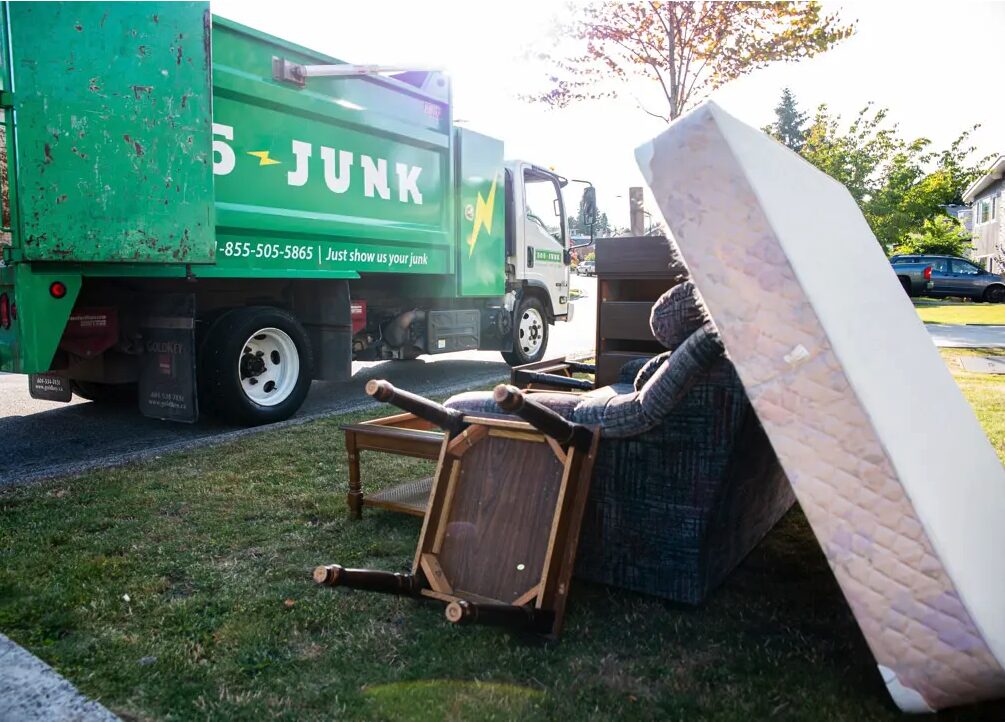
A lot of old furniture is solid wood, particleboard, or a mix of both. Regional waste studies show wood is one of the largest material categories disposed of in Metro Vancouver. Old sofas, dressers, and bed frames often land in that same wood total once discarded.
Metro Vancouver runs ongoing recycling programs that pull wood and other reusable material out of landfill. Furniture that gets broken down or reused fits directly into that effort, instead of adding to it.
Movers, Renters, and Property Managers Have Different Needs
A homeowner clearing out one room before a move usually has a simple, predictable job. A property manager turning over several units often deals with furniture tenants left behind. That work sometimes runs on a tight timeline before new tenants arrive.
An estate cleanout sits somewhere in between. A full household of furniture, older and heavier on average, needs to move out at once. Each situation calls for a different truck size and crew count. Weight-based pricing still works the same way across all three.
Donation and Reuse Can Offset Cost
Not every piece needs to end up in a landfill. A couch, table, or dresser still in good shape can go to donation instead of disposal. Someone else’s living room is often a better ending than a truck to the transfer station. The City of Vancouver’s push to cut landfill waste covers building material and bulky household items alike. Furniture fits right into that goal.
Items donated through our Habitat for Humanity partnership skip the landfill step completely. Sorting out pieces worth saving early keeps a diversion rate high. Doing it after disposal is too late.
Timing Affects the Bill Too
Rush jobs often carry a premium with other companies. That happens when a crew has to be pulled off another job with short notice. Our same-day service carries no rush surcharge, so this stays out of your quote entirely.
Booking a move-out date ahead of time still helps. It lets a crew plan the right truck size and route before pickup day arrives.
Seasonal Demand Can Shift Scheduling
Spring and summer bring a wave of moves and lease turnovers across Greater Vancouver. Trucks and crews get busier during these stretches, especially near the end of a month. Booking a pickup a few days ahead helps lock in the date you want. Move-out day tends to be the hardest slot to book last minute.
Fall and winter tend to move slower for furniture pickups. Estate cleanouts and renovation clear-outs still happen year-round, though. Either way, same-day availability means a sudden move rarely turns into a scheduling headache.
Common Furniture We Remove
No two homes need the exact same pickup, but most jobs include a mix of these items. Knowing what typically shows up helps set expectations before the truck arrives.
- Sofas, sectionals, and loveseats
- Dressers, wardrobes, and bed frames
- Dining tables and chairs
- Mattresses and box springs
- Bookshelves and cabinets
- General inside junk removal after a move or renovation
Each item weighs differently. That is exactly why weight-based pricing gives homeowners a fairer number than a volume guess.
Frequently Asked Questions
How is furniture removal priced?
Furniture removal cost comes down to the actual weight of your load, measured with certified onboard scales. Heavier pieces like solid wood dressers cost more than light ones.
Does a single piece of furniture cost less than a full load?
Yes. A single couch or chair weighs far less than a full room of furniture. Smaller pickups typically land at a lower price. A one-item pickup is usually the quickest job to schedule too.
Do stairs or tight hallways increase the price?
They can. Difficult access adds real time to a job. Large, heavy pieces like sectionals or wardrobes need extra care on multiple flights of stairs.
Can old furniture be donated instead of thrown out?
Yes. Furniture in good condition can go to our Habitat for Humanity partnership instead of landfill. This choice supports the region’s reuse and diversion goals.
Can you take apart large furniture before removing it?
Yes. Crews can disassemble bed frames, wall units, and other bulky pieces on-site. That keeps larger items moving safely through tight spaces.
How can I keep the price down?
Donating usable pieces separately and clearing a path to the item both help. A little prep on your end saves labour time for the crew.
Get a Fair Number for Your Next Pickup
Every furniture removal job looks a little different, from a single armchair to a full apartment clear-out. A certified scale gives you a real number before the truck leaves your driveway.
A quick swap-out and a full household move both benefit from knowing what shapes the total. A clear number, weighed on the spot, beats an estimate that shifts once the crew arrives. No surprises once loading starts.
Clearing space in Greater Vancouver? Request a pickup and see your furniture removal cost calculated the fair way. By weight, not by chance.